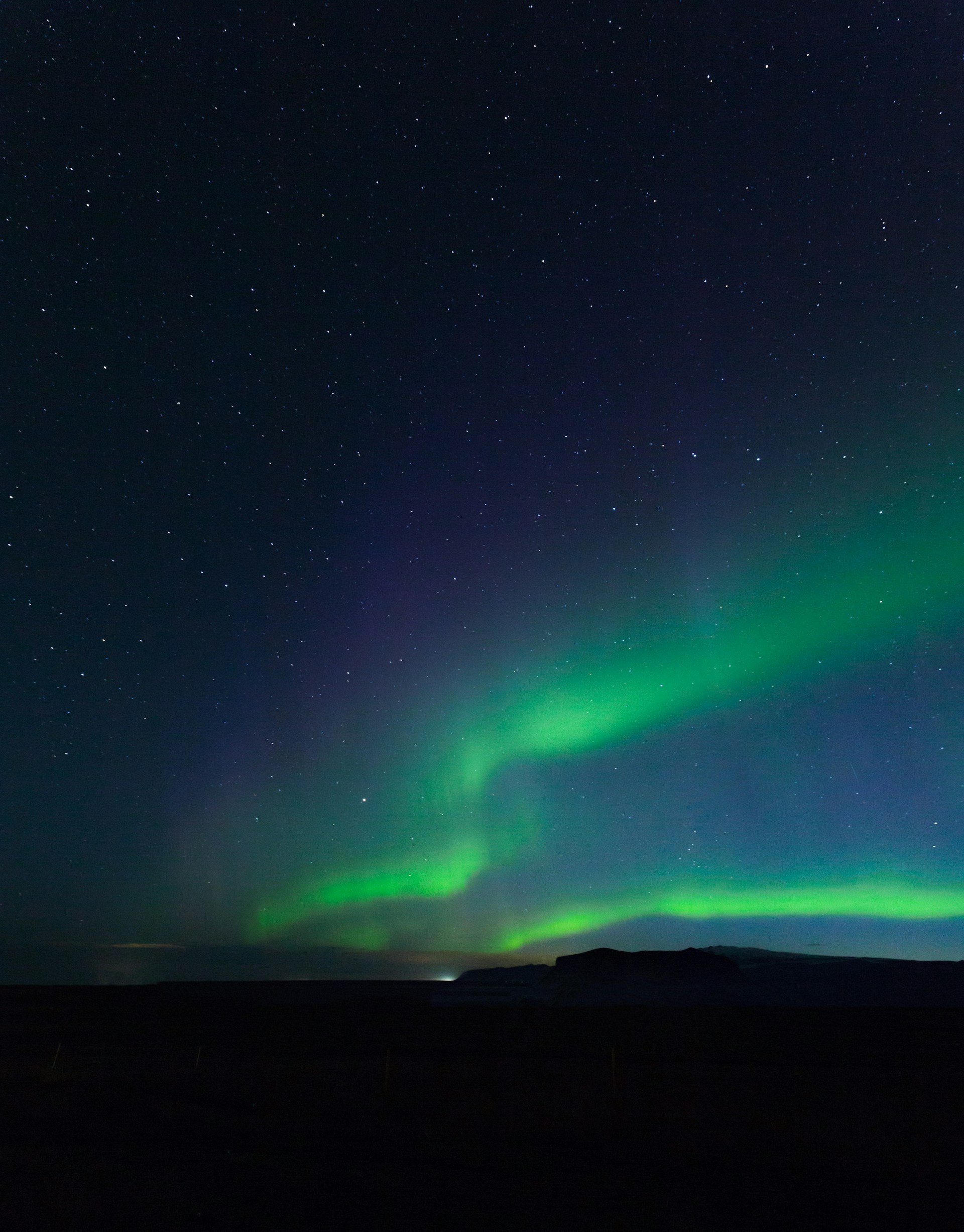
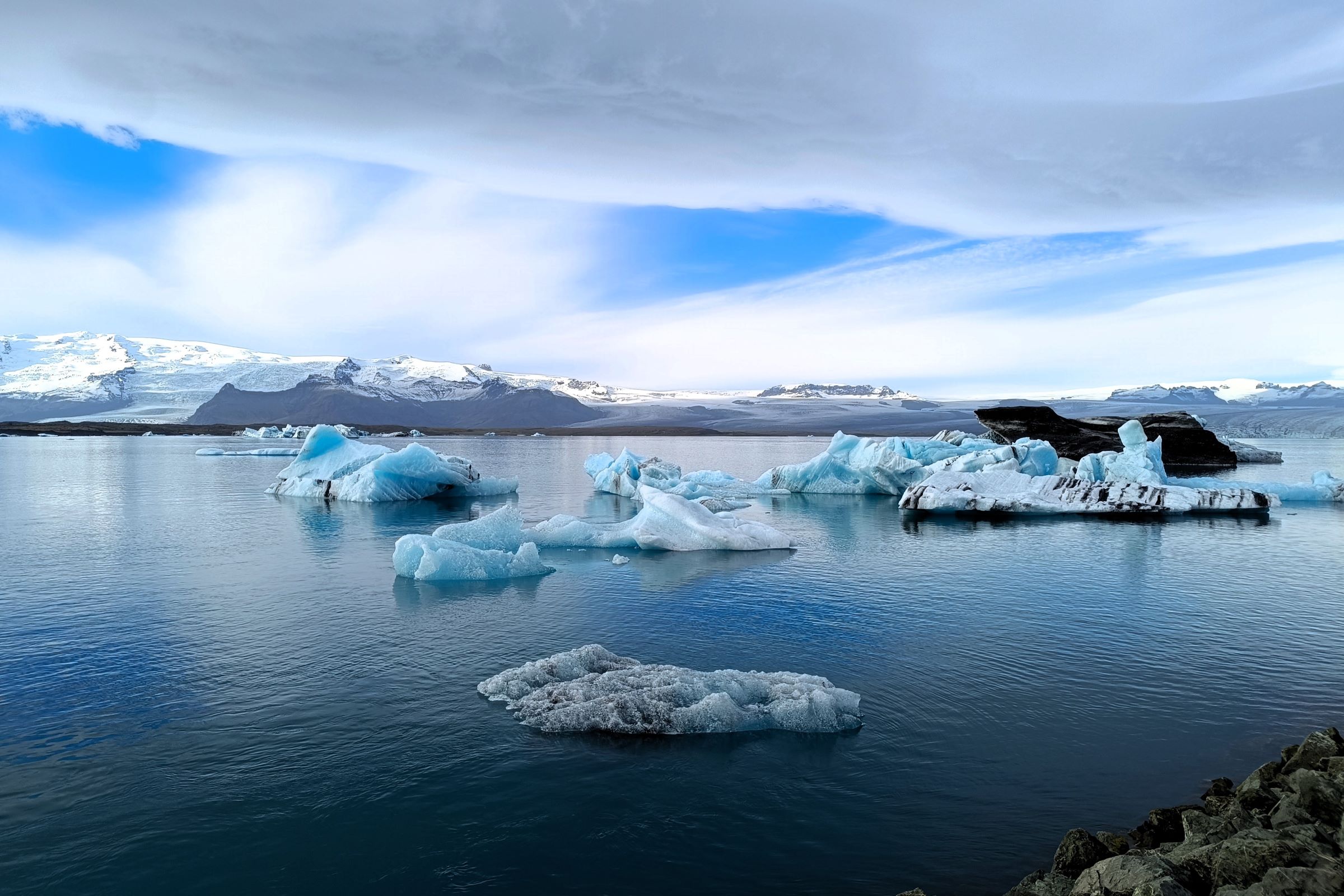
Jökulsárlón and Diamond Beach are, by any measure, two of the most photographed places in Iceland — a thousand icebergs drifting through a glacial amphitheatre, then washing up as glass sculptures on black volcanic sand. They are also unforgiving subjects: violent weather, sneaker waves, tight parking, and light that changes hour by hour. This field guide condenses what our team has learned standing on those shores in every season — where to stand, when to be there, and how to come home with images that look like what you actually saw.
Golden hours bookend the day
Lens range: 16–200mm useful
Sneaker waves: real and lethal
Know Your Two Locations
Laguna de Jökulsárlón is the lagoon proper: viewpoints along the western shore by the main car park, grounded icebergs in the shallows, the calving face of Breiðamerkurjökull a kilometre or so north, and the Ring Road bridge crossing the outlet channel. Diamond Beach (Fellsfjara) lies across Route 1, where icebergs that wash out to sea return to land on the black sand beach — smaller, clearer, polished pieces, best in the first few hundred metres either side of the car park there.
Parking is paid at both lots (currently 1,110 ISK for a standard car at the lagoon per the national park tariff; the beach lot is paid separately via machines or the Parka app). Our main lagoon guide covers orientation, and the Diamond Beach survival manual covers the beach in depth.
Light: When to Point the Lens
Composition Recipes That Work
Gear That Earns Its Weight
Diamond Beach has powerful sneaker waves — sudden surges far larger than the surf line that can knock adults over and drag them out. Face the ocean, stay well back from the waterline, never pose on beached icebergs (they roll), and never turn your back for a photo. At the lagoon, the shore ice and grounded bergs are unstable; do not climb them. Check safetravel.es before your session.
Drones, Boats and Etiquette
Drone rules in and around the lagoon sit inside Parque Nacional Vatnajökull — regulations have tightened in recent years and permits or zone restrictions may apply, so check the park’s current guidance before flying, and never fly over people, seals or the boat routes. Speaking of boats: the amphibian and zodiac tours give genuinely different aerial-height perspectives — our boat comparison explains which suits photographers best. And a general ethic: stay on paths, pack out everything, and give seal haul-outs a wide berth — a disturbed seal is a lost photo every time.
Preguntas frecuentes
What’s the single best time to photograph the lagoon?
Can I fly a drone at Jökulsárlón?
How do I keep my gear safe from salt spray and sand?
Are there photography tours from the hotel area?
Planning your trip to Jökulsárlón?
Fosshotel Glacier Lagoon sits halfway between Skaftafell and Jökulsárlón — about 25 minutes of driving to either. The perfect base for everything described in this guide. Check live rates for your dates.


 English
 German
 Spanish
 Italian
 French
 Portuguese
 Turkish
 Swedish
 Russian
 Chinese
 Korean